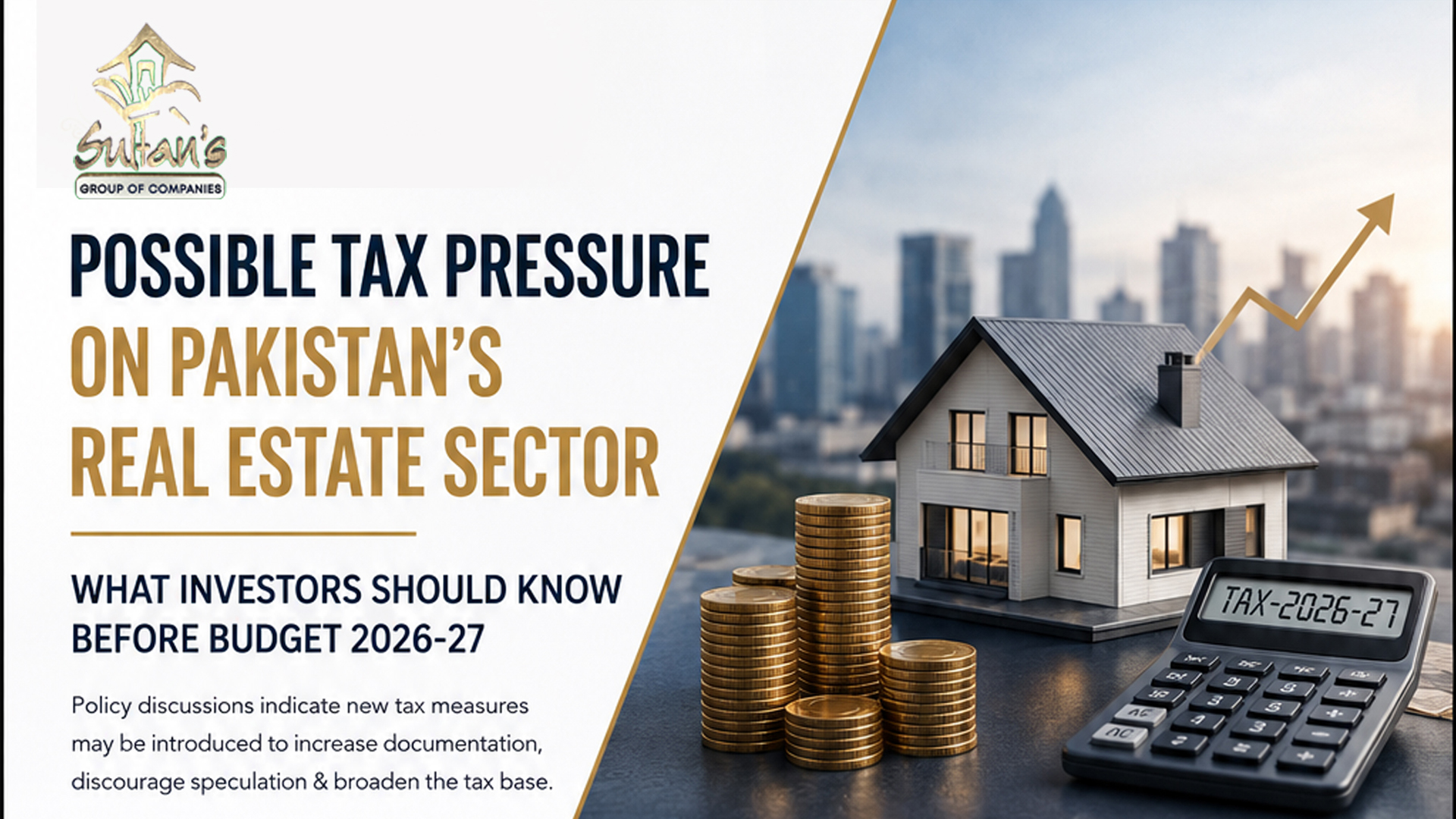
Possible Tax Pressure on Pakistan’s Real Estate Sector – What Investors Should Know Before Budget 2026-27
Pakistan’s real estate sector has long remained one of the country’s most influential investment avenues, attracting investors, developers, overseas Pakistanis, and end users alike. However, as the government moves toward Budget 2026-27, discussions around expanding the tax base have once again brought the property sector into focus. Recent policy conversations suggest that real estate could face additional taxation measures as part of broader revenue reforms.
According to recent reports, the federal government has asked provinces to generate additional revenues for the upcoming fiscal year, with agriculture, services, and real estate identified among the major sectors under consideration. The overall revenue targets are linked with fiscal reforms and IMF commitments, increasing the possibility of stricter documentation and enhanced tax collection mechanisms.
For property investors, this does not automatically mean higher taxes across the board, but it does indicate that the sector may experience policy adjustments affecting transactions, investment structures, and undeveloped assets.
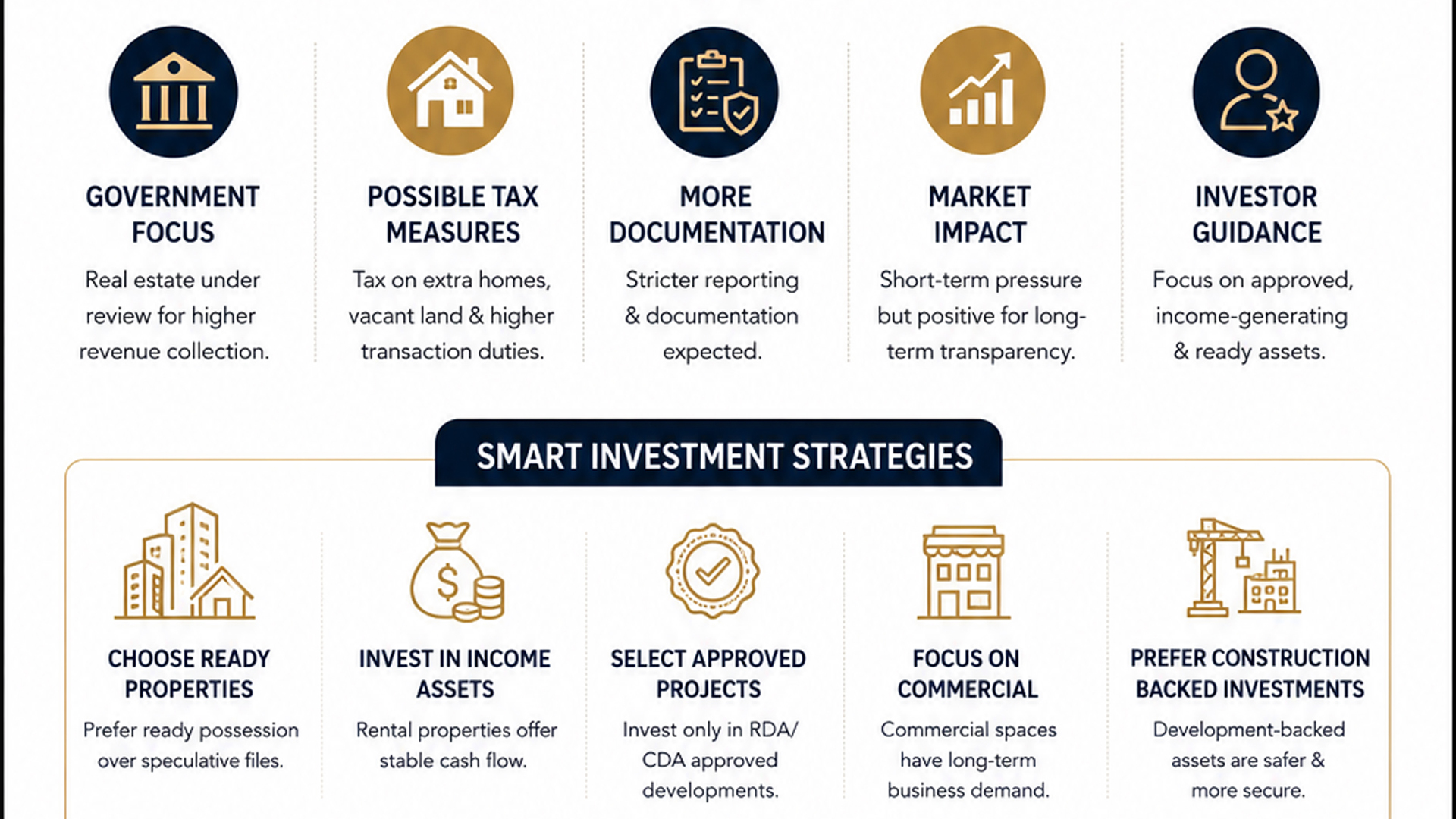
One proposal receiving attention is the introduction of taxation on additional residential properties and second homes above certain valuation thresholds. Industry recommendations have suggested extra levies on investment properties while keeping primary residences exempt. Such measures are often aimed at discouraging speculative holding and improving market documentation.
Another proposal discussed in policy circles involves taxation on vacant urban land. If introduced, this could impact investors holding plots for long-term appreciation without development. The objective behind such recommendations is generally to encourage construction activity and better land utilization in urban centers.
Despite these possible pressures, there is also a positive side for genuine buyers and developers. Market observers believe that reforms may eventually create a healthier and more transparent environment. Increased documentation can improve investor confidence, reduce informal transactions, and support sustainable market growth.
For investors in key locations such as Bahria Town Phase 7, Bahria Town Phase 8, and emerging commercial zones of Rawalpindi and Islamabad, the current phase should be viewed as a period of strategic planning rather than uncertainty.
Investors are advised to focus on:
- Ready possession properties instead of speculative files
- Rental income assets with consistent cash flow
- RDA/CDA approved projects
- Commercial spaces with long-term business demand
- Construction-backed investments rather than idle land holding
Real estate in Pakistan continues to hold strong long-term value because of population growth, urban expansion, infrastructure development, and housing demand. However, the market is gradually shifting toward documented and regulated investment practices.
At Sultan’s Group of Companies, we believe informed investment decisions create sustainable returns. As Budget 2026-27 approaches, investors should stay updated, review portfolios carefully, and prioritize legally approved, development-based projects.
The coming months may bring policy changes, but they can also create new opportunities for smart investors who plan ahead.